
Adult literacy rates in the UK
In England, 18% of adults aged 16 to 65, or 6.6 million people, can be described as having "very poor literacy skills." This means they can understand short straightforward texts on familiar topics accurately and independently, and obtain information from everyday sources but reading information from unfamiliar sources or on unfamiliar topics could cause problems. This is also known as being functionally illiterate.
Adult literacy statistics
These are the latest available statistics for adult literacy levels in England (2024), Scotland (2009), Wales (2010) and Northern Ireland (2012). Each nation has a different definition of basic literacy skills, so country comparisons are not possible.
-
England
1 in 6 (18% / 6.6 million people) adults aged 16 to 65 in England have very poor literacy skills.
-
Scotland
1 in 4 (26.7% / 931,000 people) adults in Scotland experience challenges due to their lack of literacy skills.
-
Wales
1 in 8 (12% / 216,000 people) adults in Wales lack basic literacy skills.
-
Northern Ireland
1 in 5 (17.4% / 256,000 people) adults in Northern Ireland have very poor literacy skills.
Adults who have struggled from their earliest years to access support with their literacy may have fallen behind their peers during their school years too. Challenges with all aspects of literacy can affect your confidence and self-esteem as well as making it difficult to get the jobs you want and navigate every day life.
Imagine how difficult it must be to use the internet, fill out vital forms or make sense of instructions if, as an adult, you find reading and writing challenging? If you have children, it's hard to support them in their learning too and so the cycle continues.
But you can break the cycle.
At the National Literacy Trust, we believe that literacy is for everyone. No limits, no lost causes, no last chances. Literacy gives you the tools to get the most out of life, and the power to shape your future. With literacy, you can change your story however old you are.
Many adults are reluctant to admit to their literacy difficulties and ask for help. One of the most important aspects of supporting adults with low literacy levels is to increase their self-esteem and persuade them of the benefits of improving their reading and writing.
Our adult literacy programmes
In addition to our extensive work in 100 prisons and Young Offender Institutions across the UK where adult literacy levels are much lower than the general population, the National Literacy Trust currently runs two adult literacy projects in the community.
Both projects are aimed at people who have experienced violence against women, domestic abuse and/or sexual violence. Often, these women may also have had an encounter with the criminal justice system.
We want to empower the women who take part in our workshops by boosting both their enjoyment and confidence in reading and writing. We believe our inspirational workshops also improve the women's wellbeing.
-
Words Rising with Anawim Women’s Centre is funded by our Birmingham Hub and Birmingham University, and delivered by the Adult Literacy Team. Learn how we are equipping women in...Learn more about Words Rising.
-
We work with women who are accessing Solace’s services and refuge accommodation, with support from Slaughter and May.Learn more about Solace.

Books Unlocked
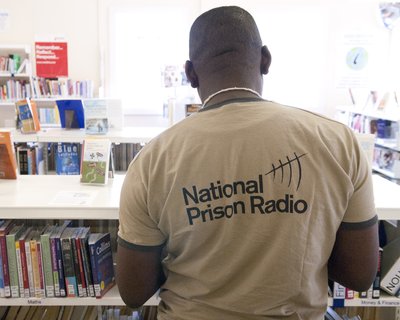
Our work in the adult literacy space also includes an empowering programme called Books Unlocked in collaboration with the Booker Prize Foundation and National Prison Radio. The programme aims to encourage people in prison to find ways to increase their frequency of reading in order to foster a love of books and build a culture of reading for pleasure.
Further support and information about adult literacy in the UK
- Visit the Gov.uk site for improving English skills or call the National Careers Service helpline on 0800 100 900.
- If an adult is employed and has access to a union, their union learning representative will be able to provide confidential advice. Information is available on the Union Learn website.
- Adults looking for literacy support can contact a local adult education college directly to find information on courses in their area. Equally, local libraries also provide support to find appropriate reading materials and reading groups.
- Parents who would like guidance and resources to be able to support their children on their literacy journey can visit the Parent Support hub on our Words for Life website.
- Parents can also find support and family learning activities provided by local colleges, libraries, schools and other organisations. Being able to become more involved in their children’s learning can be a powerful motivator to adults to improve their literacy skills.
- Read Easy recruits, trains and supports volunteers to give one-to-one tuition to adults who struggle with reading.
- The Learning and Work Institute aims to improve access to learning for adults.
- The Reading Agency provides a number of free resources to help improve adult reading skills.
- Learn Direct provides online courses and a network of learning centres. Call 0800 101 901 for advice and information on their adult literacy courses.